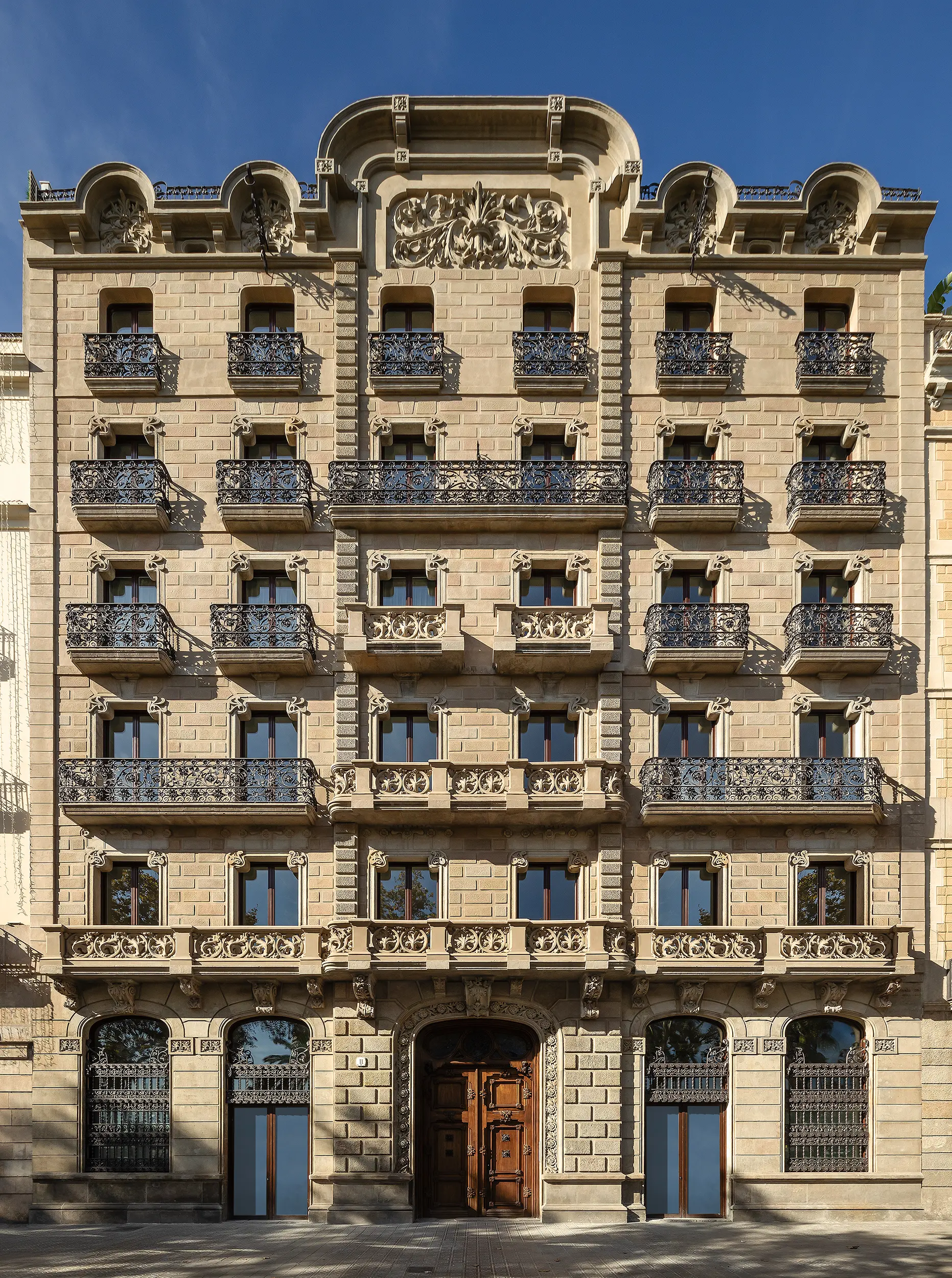
Condeminas Building


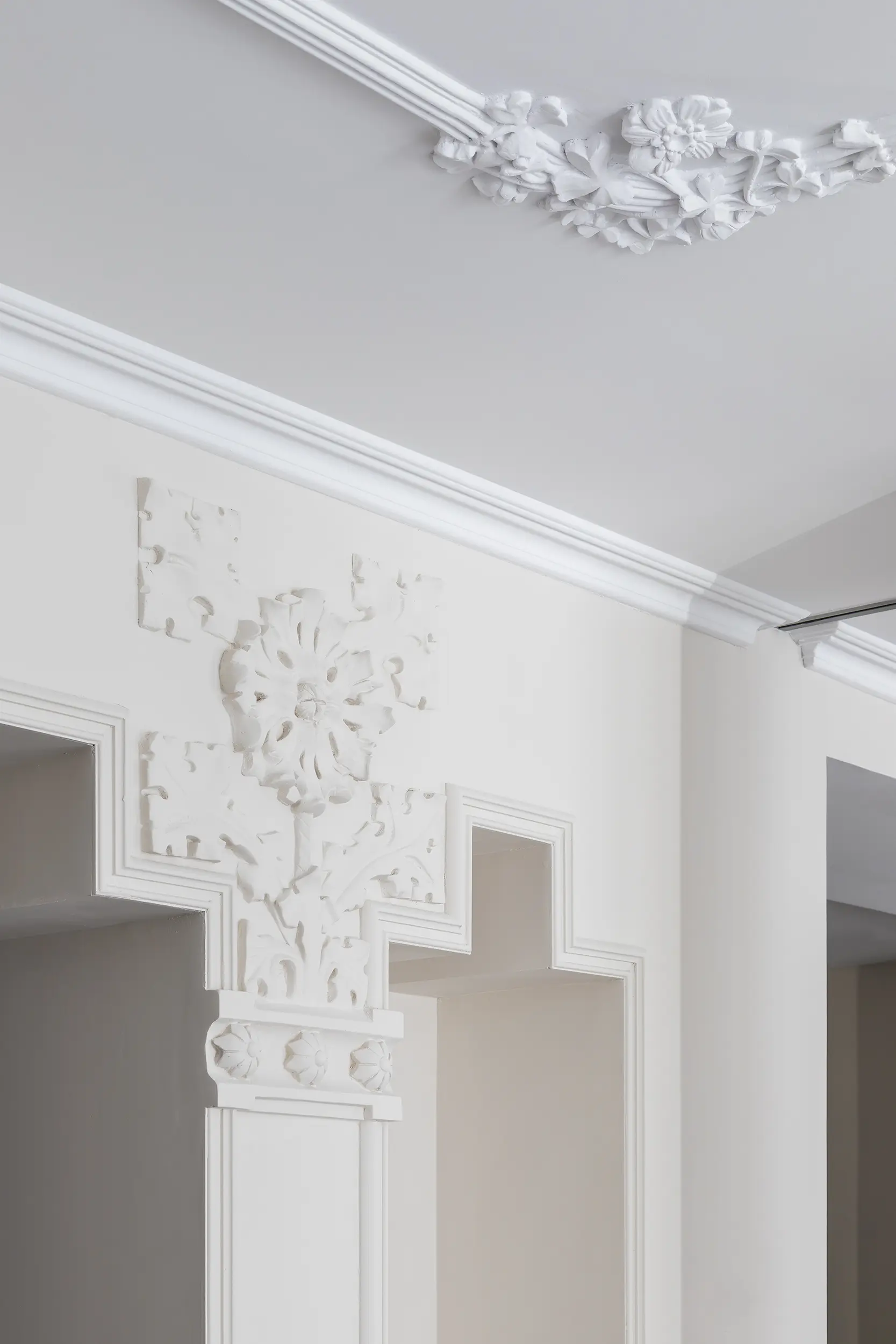
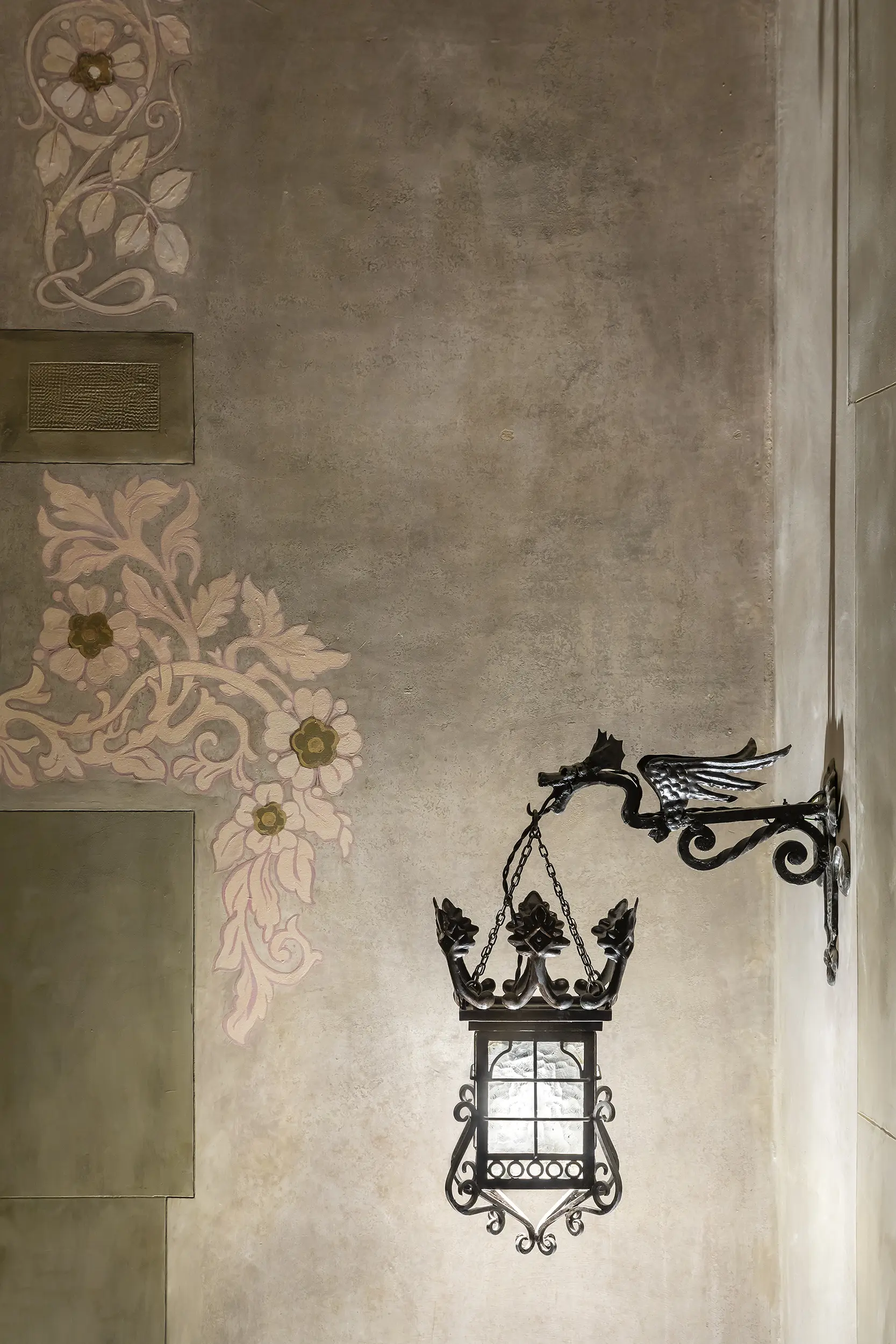
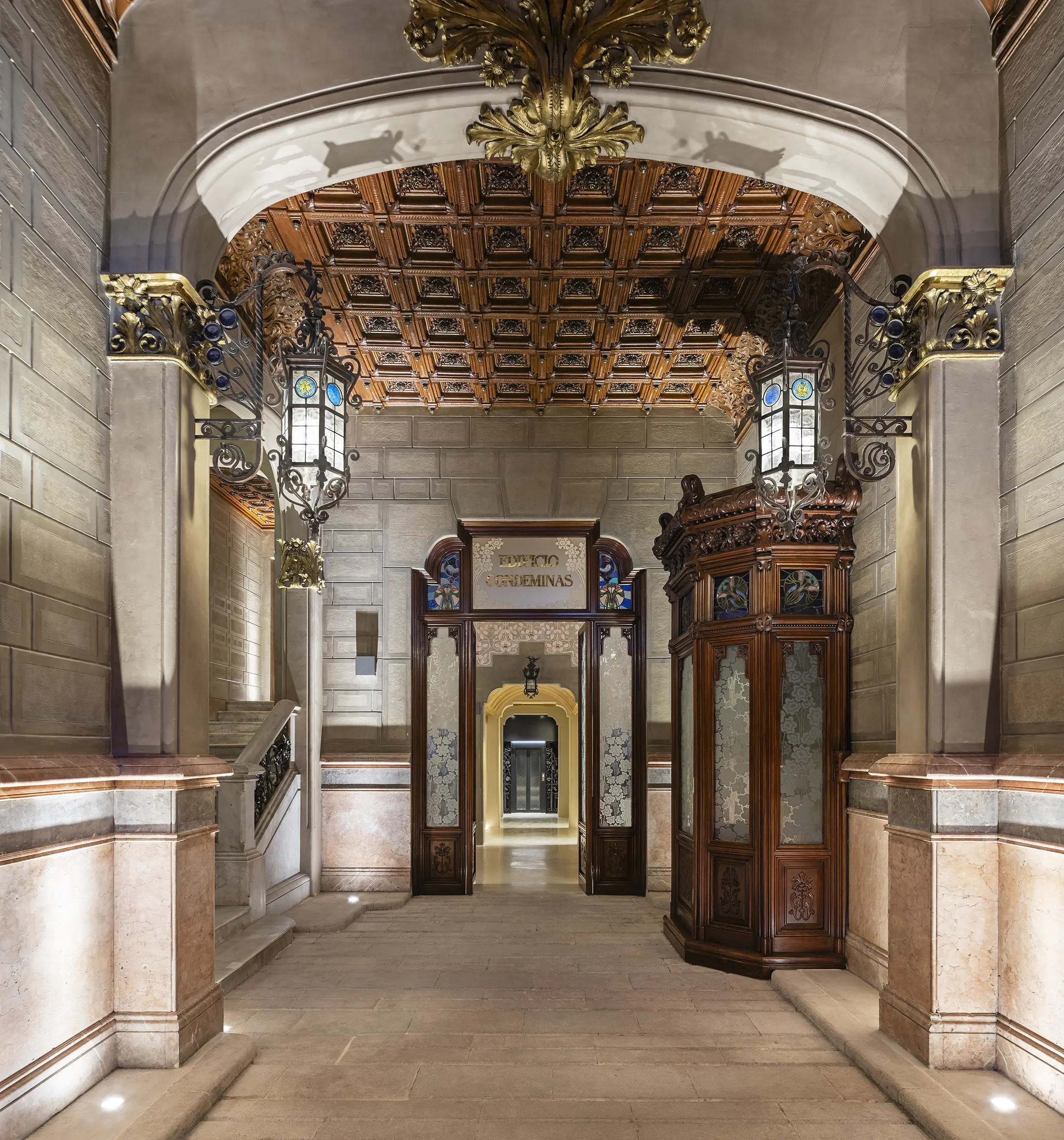
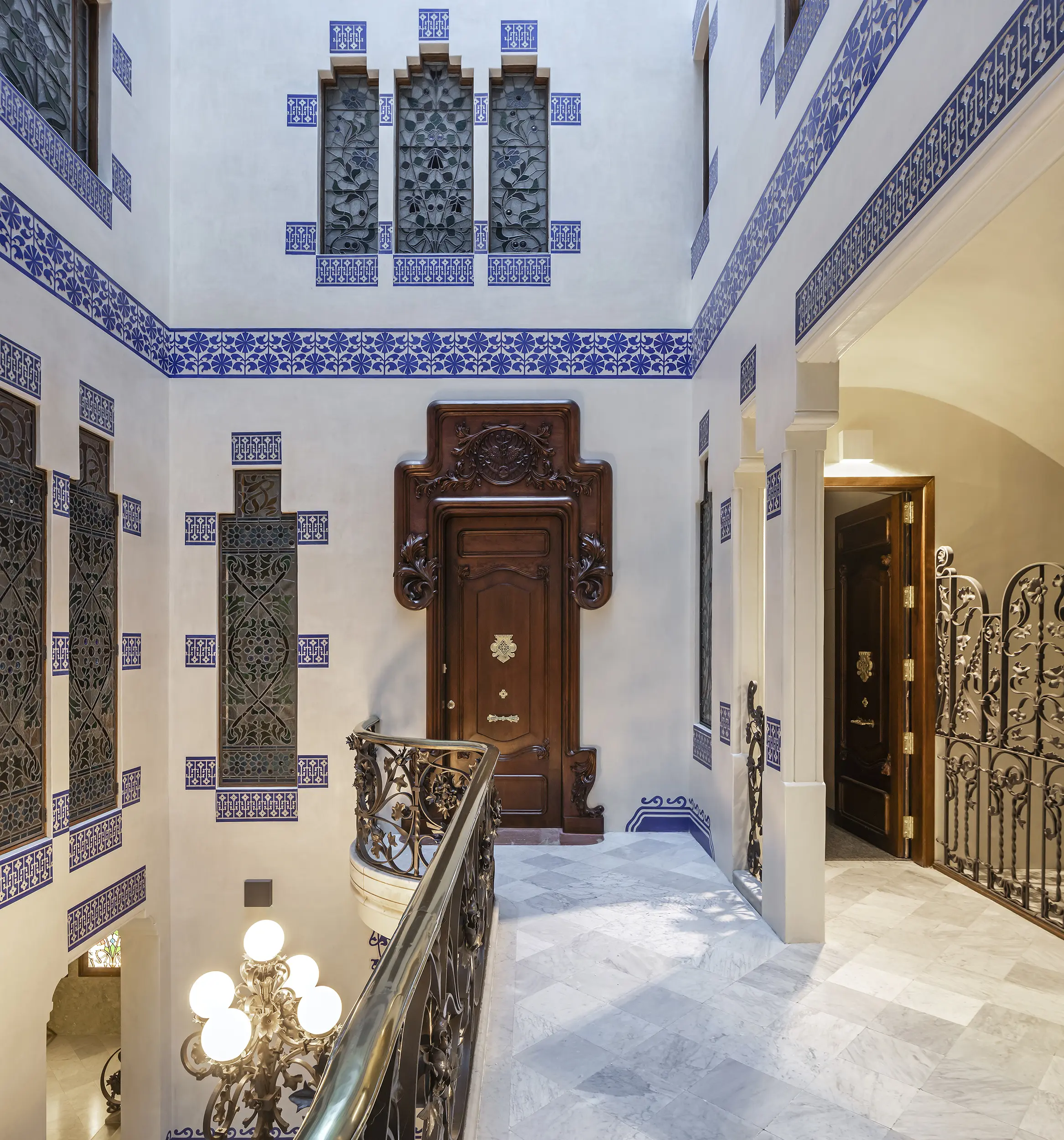
Casa Gubern, known as the Condeminas Building, is one of the most notable buildings on Barcelona’s Passeig Colom. Listed as a BCIL heritage site, it is a Modernist building designed in the early 20th century. Over the years, its residences were converted into offices, resulting in the alteration and deterioration of the original decorative features. The project restored the building’s original residential use through high-end apartments.
The comprehensive refurbishment project involved highly complex structural reinforcement; the conservation and restoration of original elements of great artisanal value; the implementation of energy-efficiency strategies; and the functional adaptation of the building to its new uses.
- Year: 2022-2024
- Duration (months): 24
- Location: Passeig de Colom, 11, Barcelona
- Surface area (m2): 3.500
- Developer: Privat
- Architecture: GCA Architects
- Photography: Marcela Grassi
-
Refurbished spaces for wellbeing
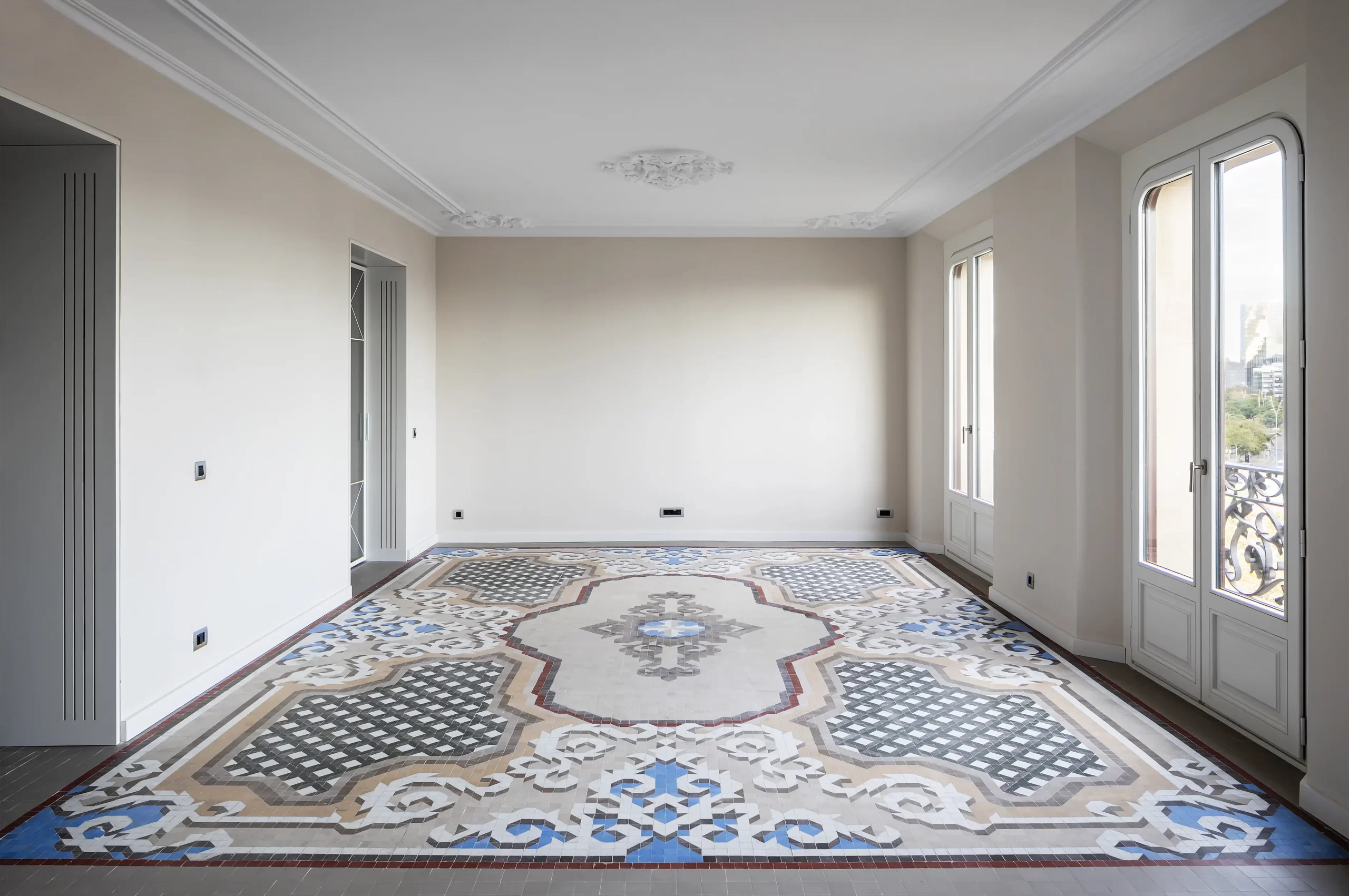
The construction project created new living spaces that combine the building’s historical value with the 21st-century wellbeing and comfort standards. Energy refurbishment and improved acoustic performance – through high-quality insulation and exterior carpentry – were also key aspects.
-
Focus on heritage refurbishment and client satisfaction
The intervention required respectful construction work with high demands for excellence in finishes. Our goal was to enhance the value of the property, involving a large number of specialists in restoration and conservation.
-
Efficient project management
Throughout the two-year construction period, coordinated teamwork enabled an accurate and on-schedule execution. As part of a large-scale refurbishment, the project included an extensive programme of structural surveys and strict quality controls.
The structural refurbishment of the building
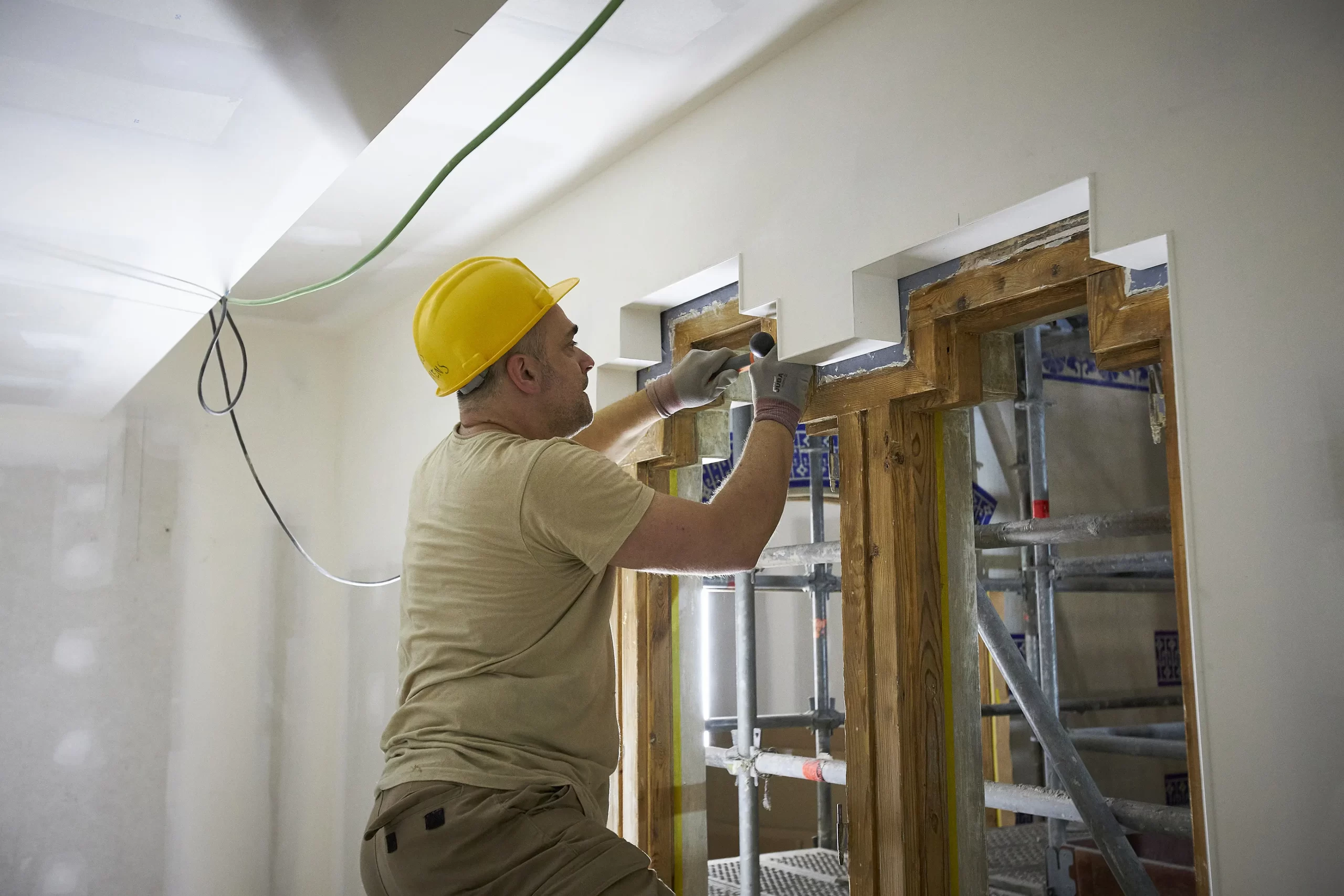
- High-complexity structural reinforcement to guarantee the stability of the building and ensure compliance with the Technical Building Code
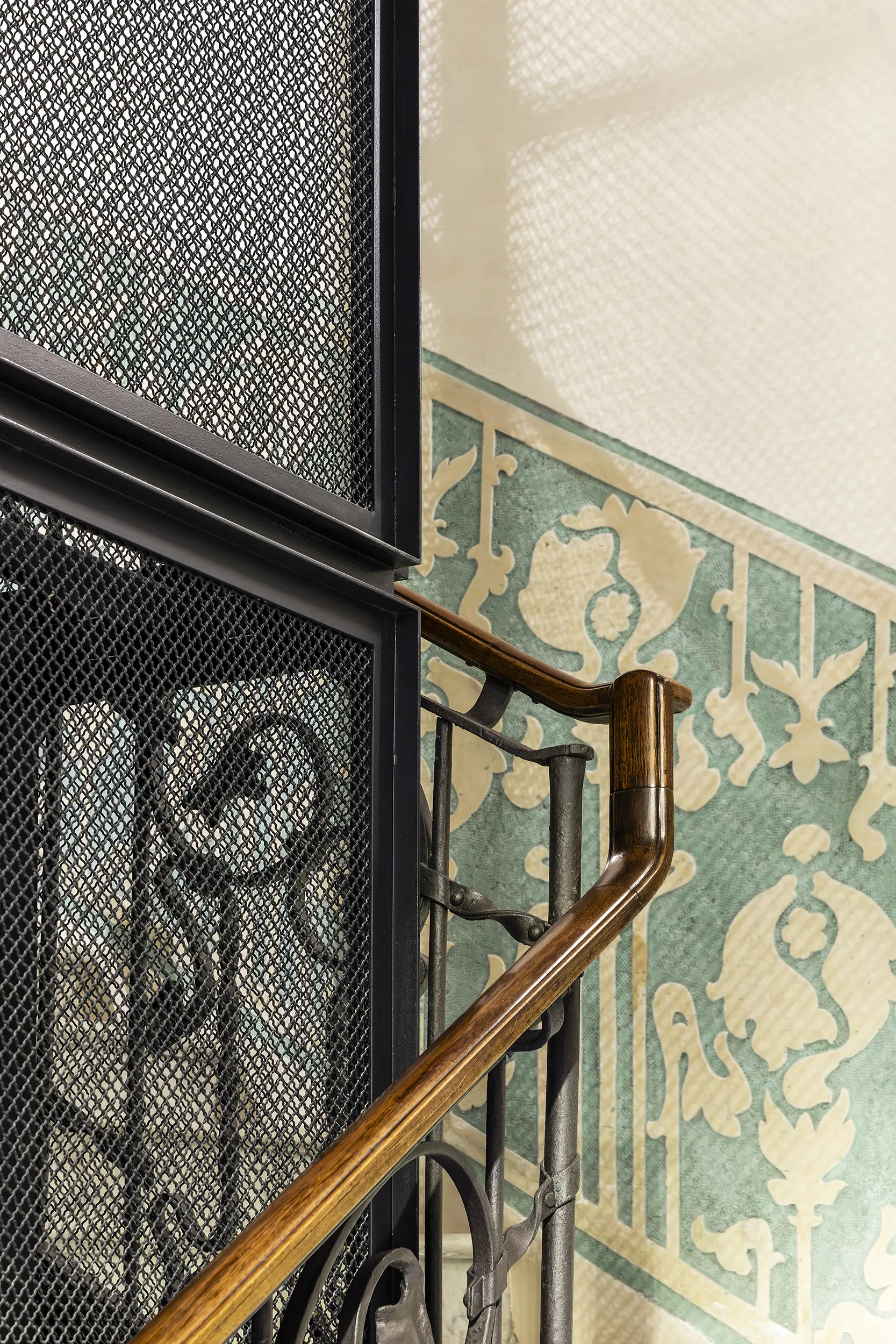
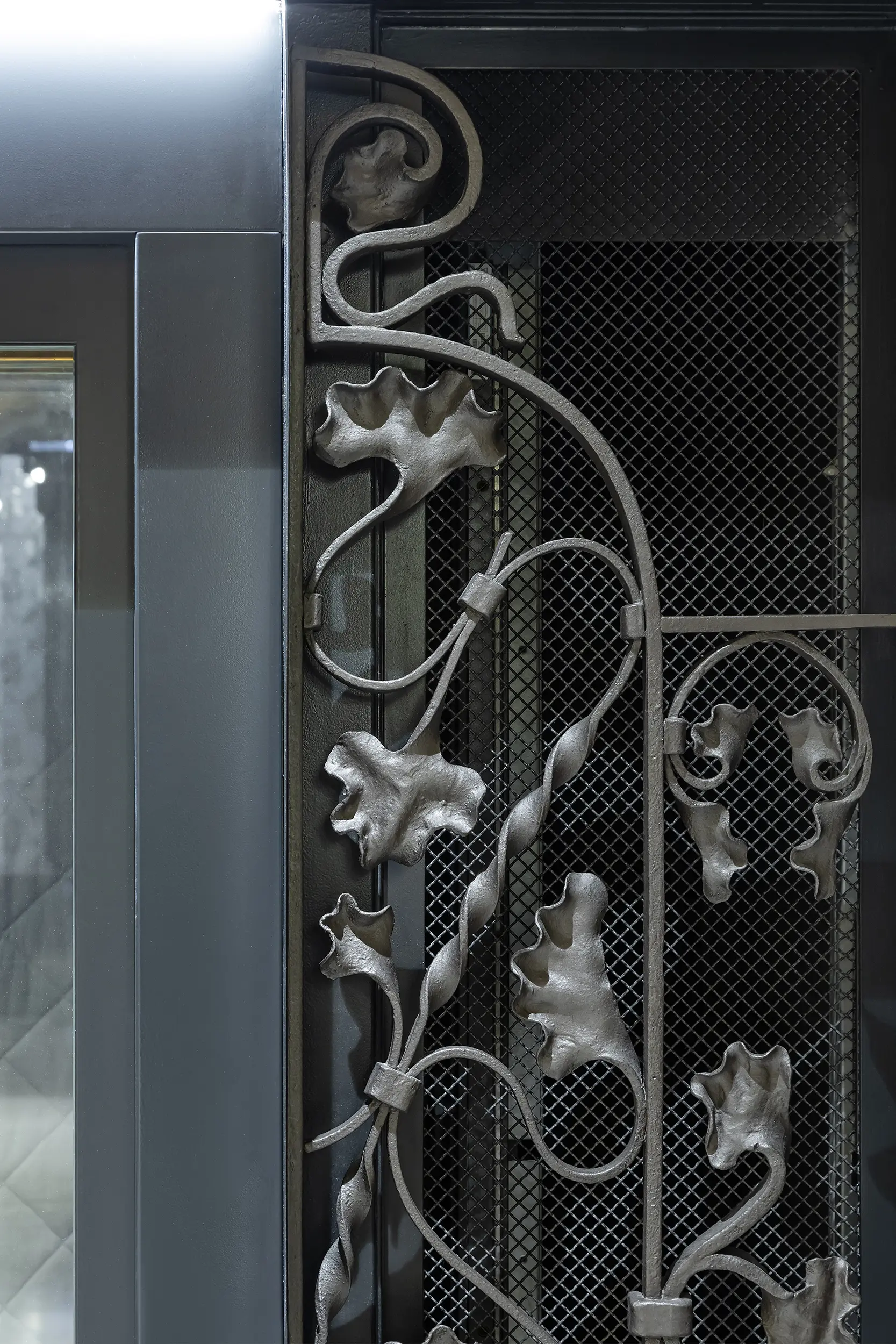
- Specialised metalwork to preserve and strengthen original wrought-iron structures
- Integration of different reinforcement systems to improve the capacity of the original structure: encasing, shoring, propping, infilling…
- Implementation of advanced moisture-control systems and protection against xylophagous agents
The energy efficiency and sustainability of the building
- Energy refurbishment of the building envelope and replacement of HVAC and DHW systems to achieve an A-grade energy rating
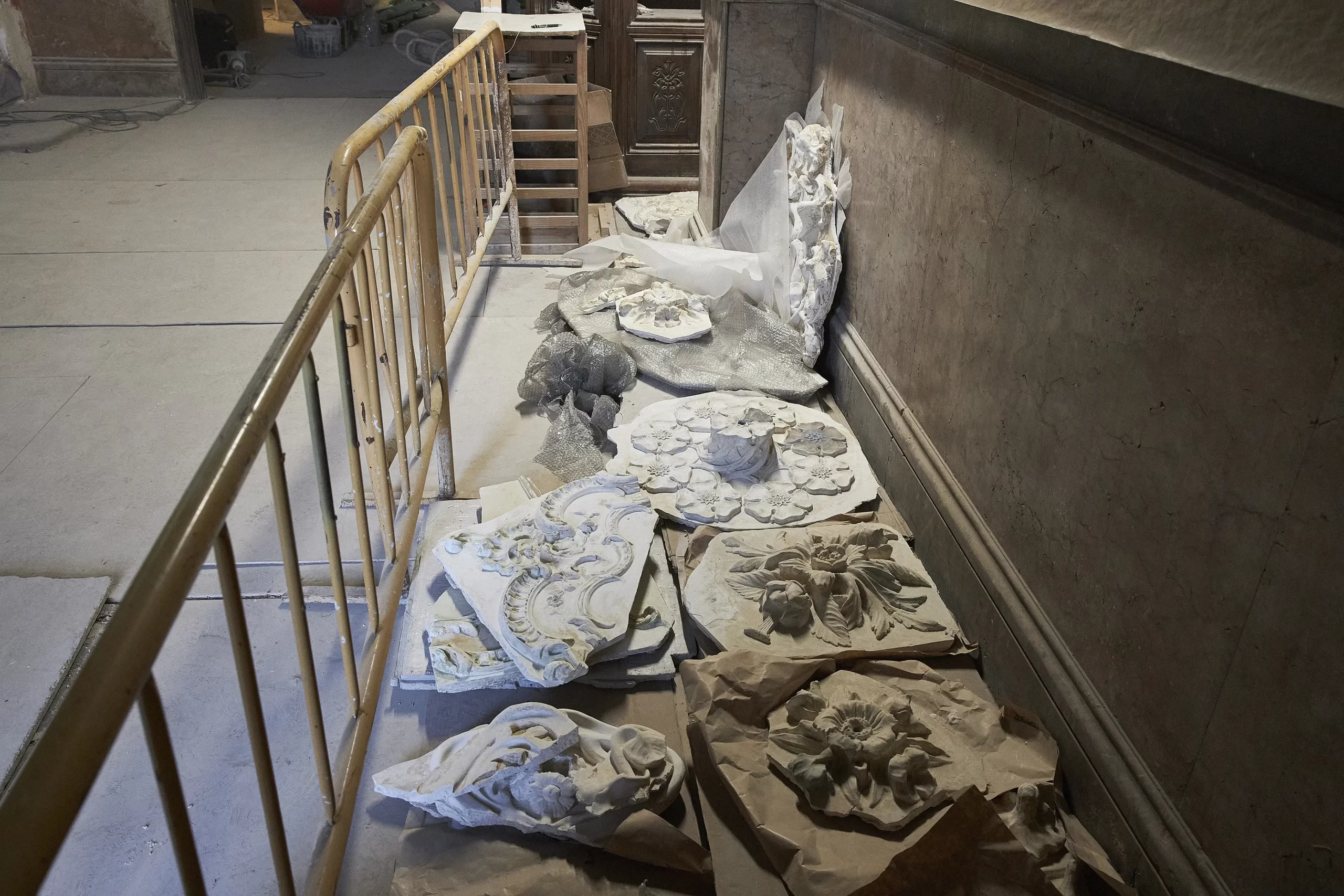
- Maximum recovery of original heritage elements, minimising the need for new materials and reducing the building’s associated energy footprint
Restoration of high-value Modernist heritage elements
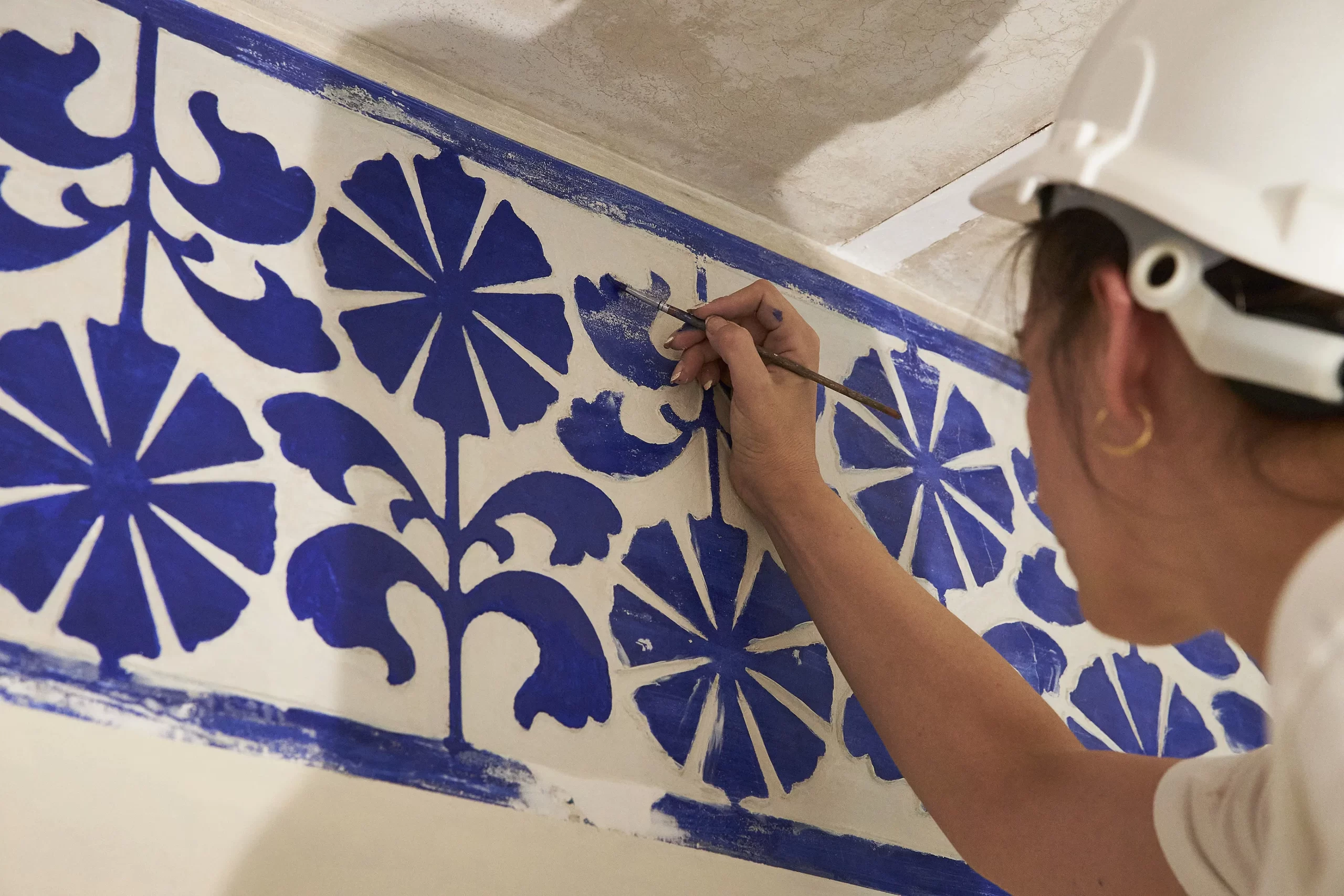
- Conservation and restoration of stained-glass windows, wrought-iron structures, Nolla hydraulic patterned tiles, handcrafted wooden ornamentation and decorative wrought-iron work
- Work carried out by a multidisciplinary team including architects, structural engineers, restoration specialists and artisans
- Respectful, highly detailed work throughout all project phases to ensure historical accuracy in the refurbishment