Ciutat Esportiva Damm
- New build
- Sports
- Industrialised construction
- Sustainability


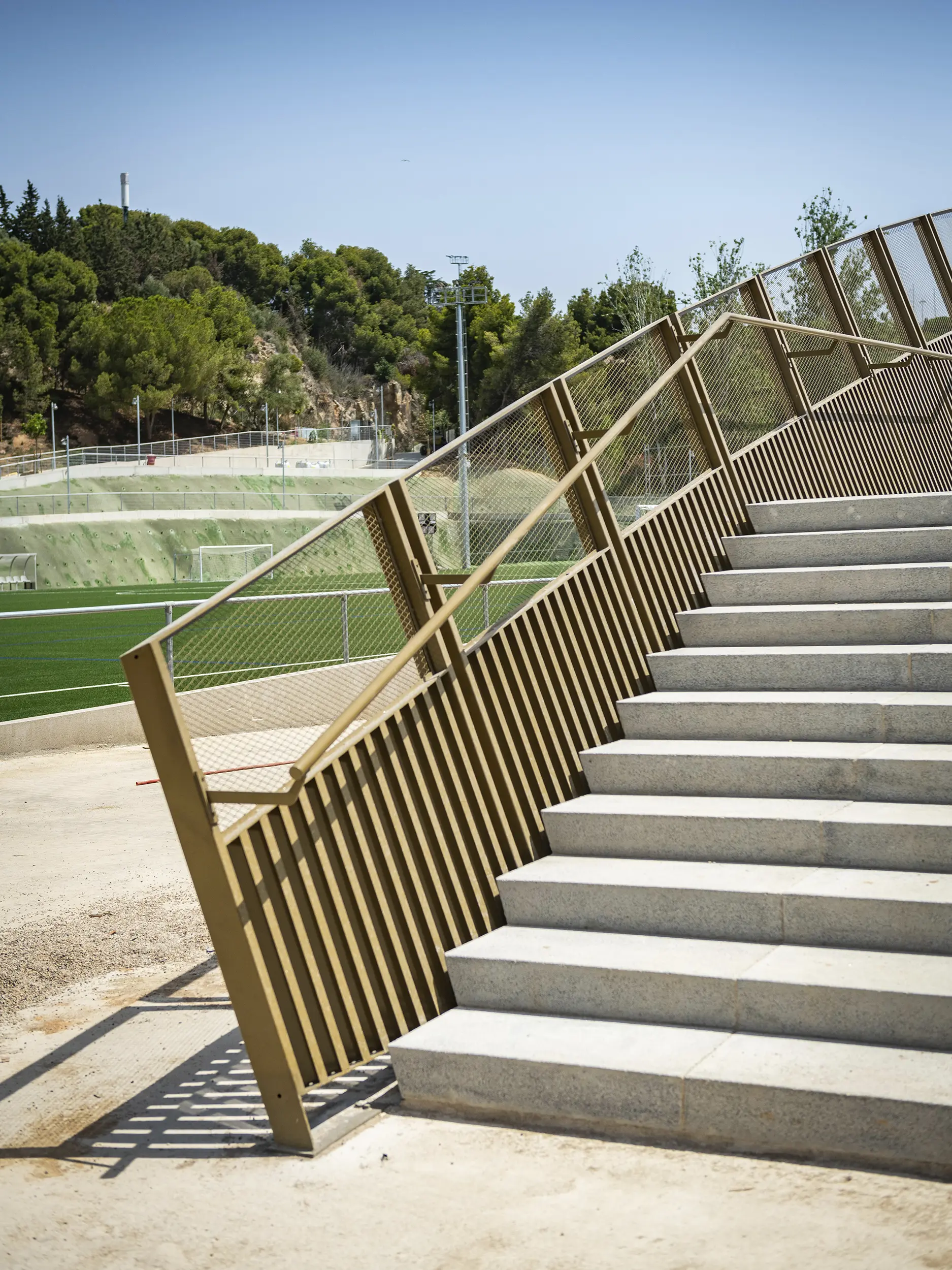
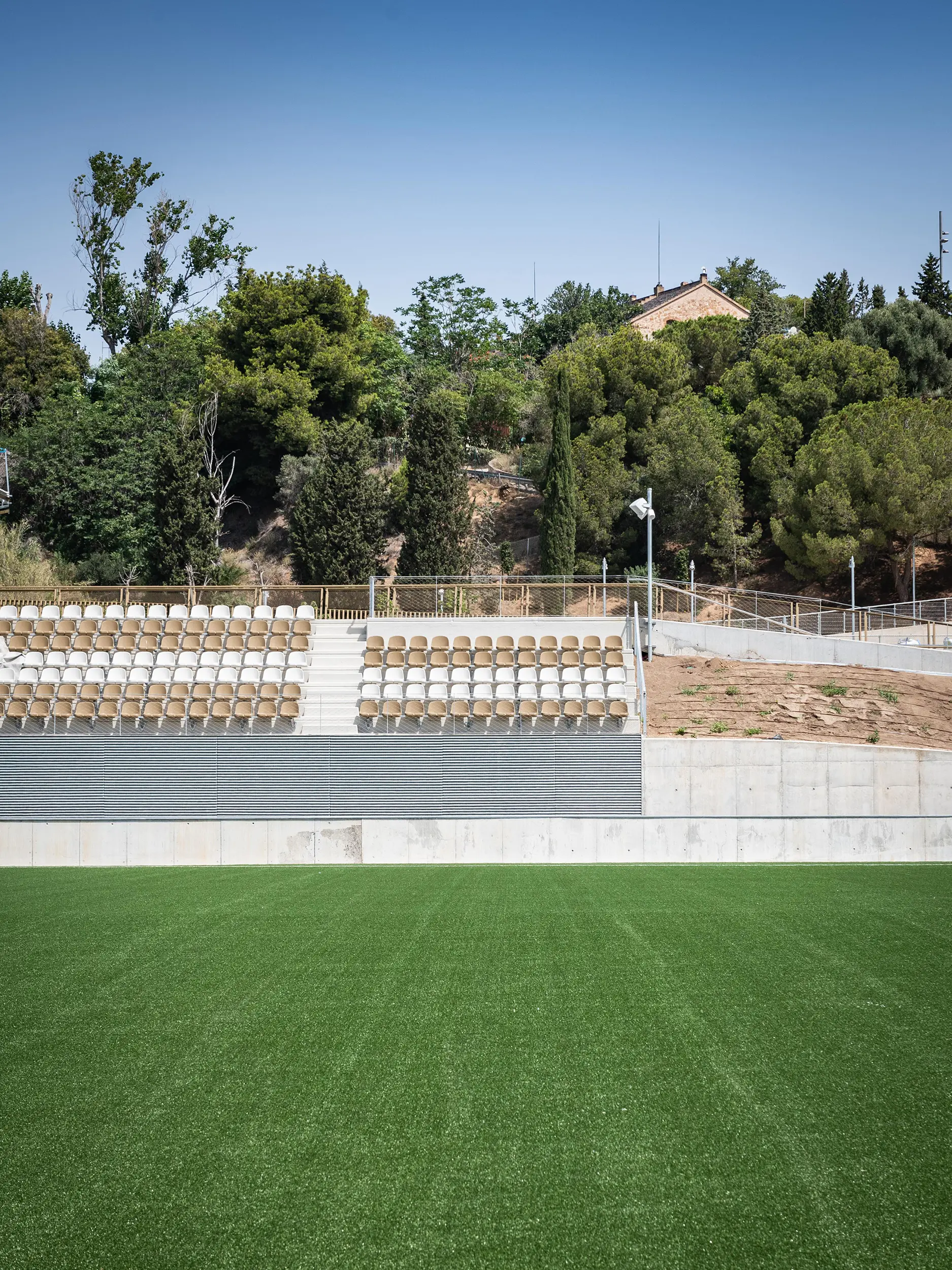
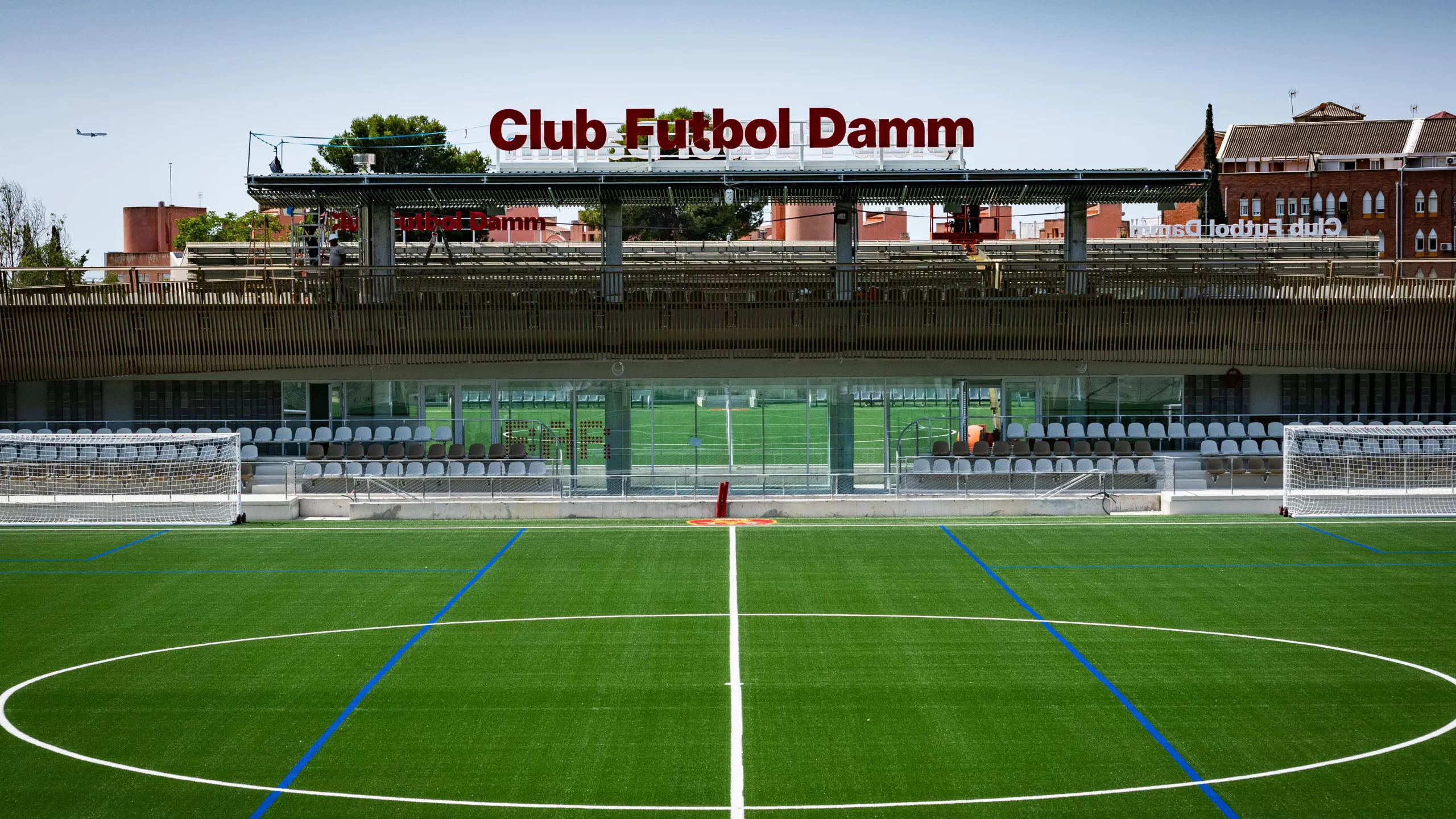
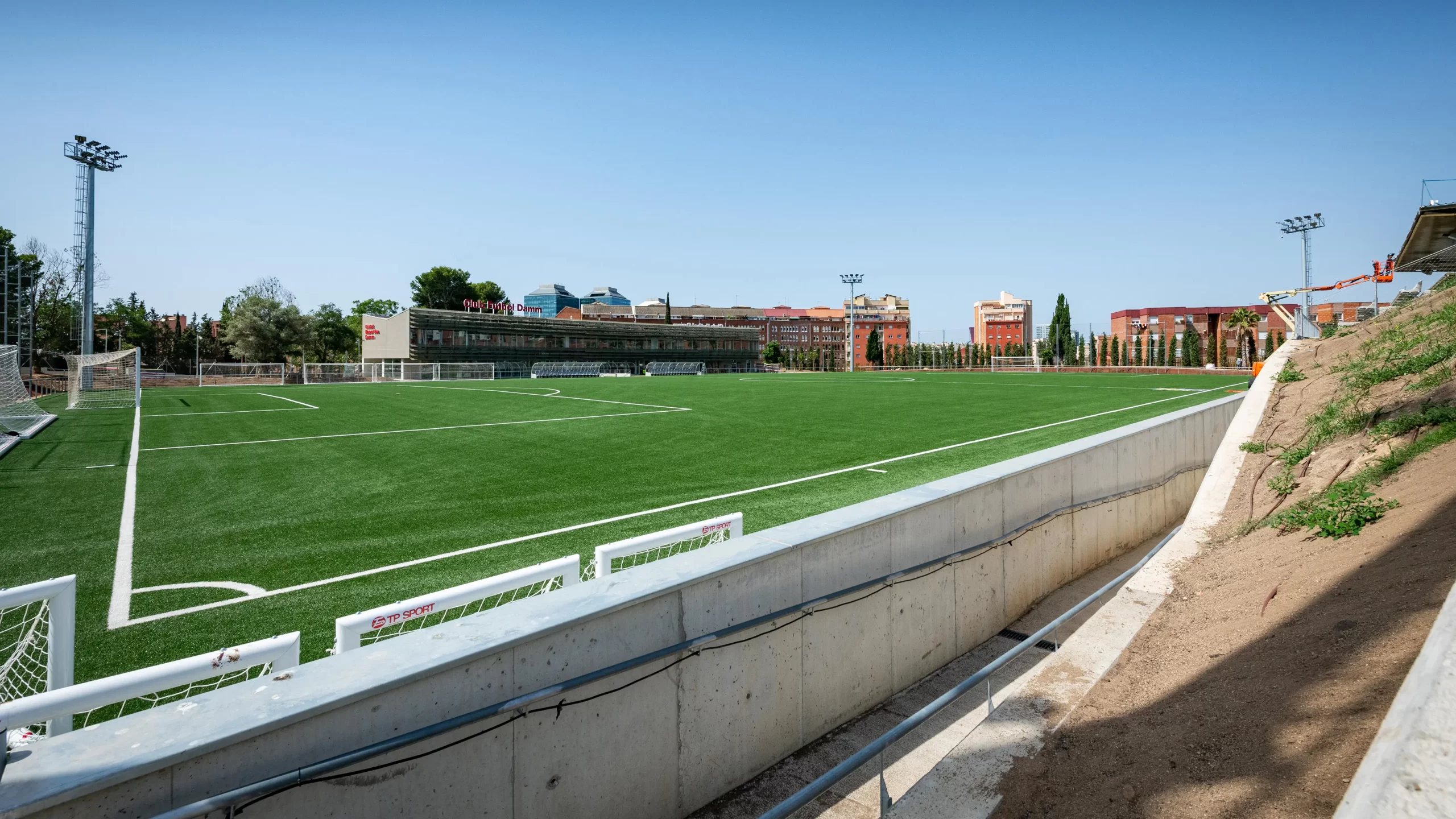
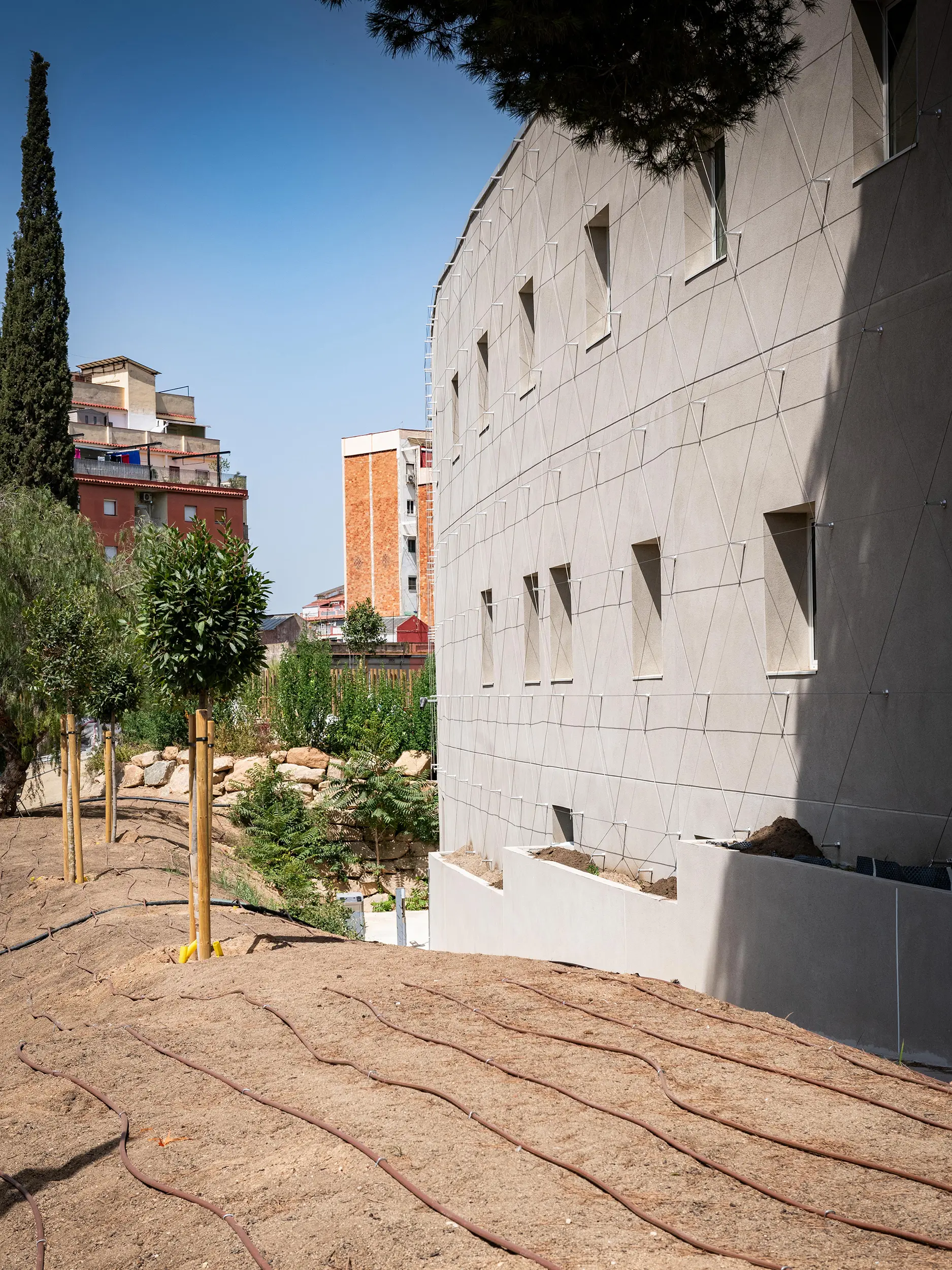
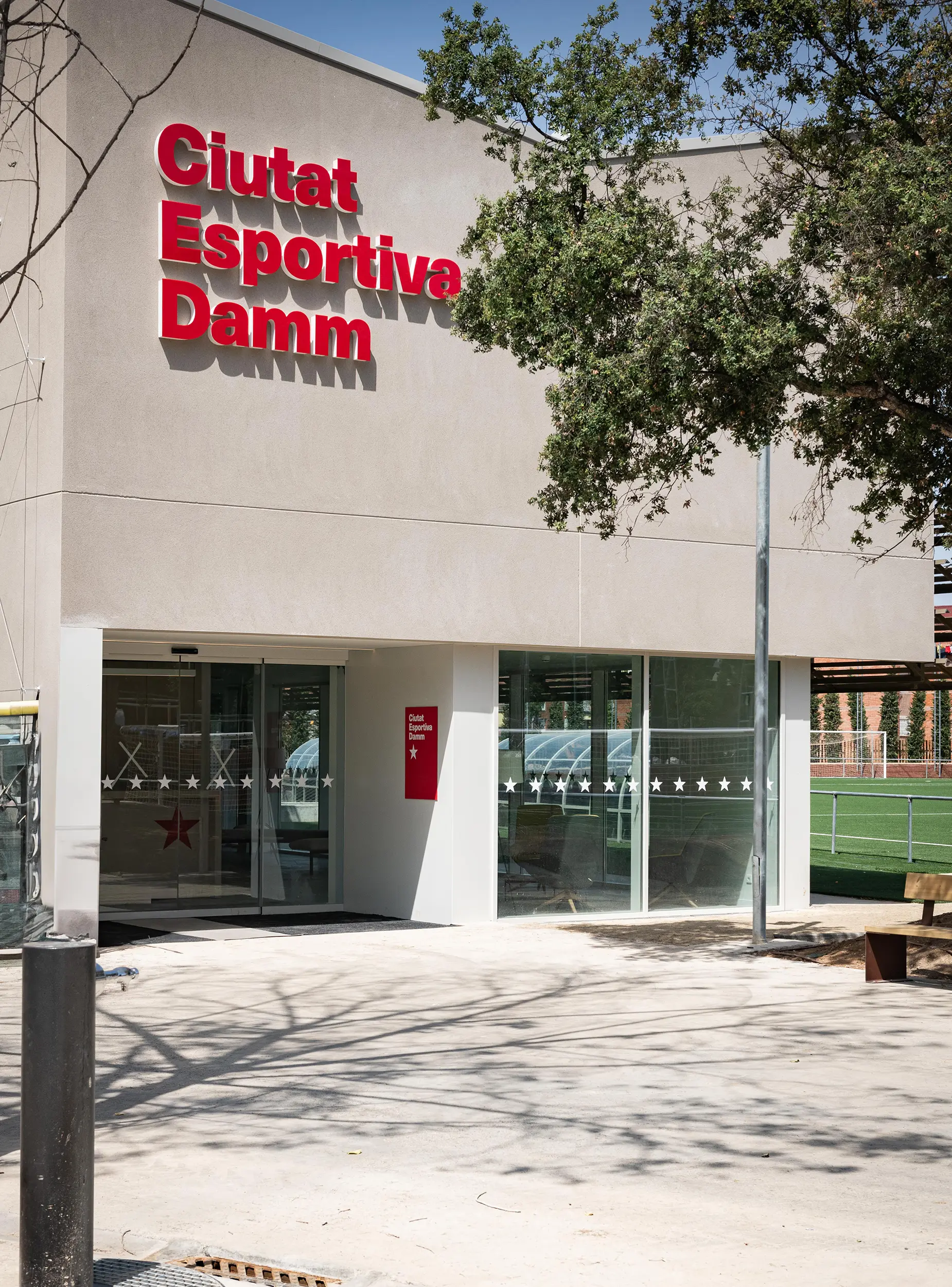
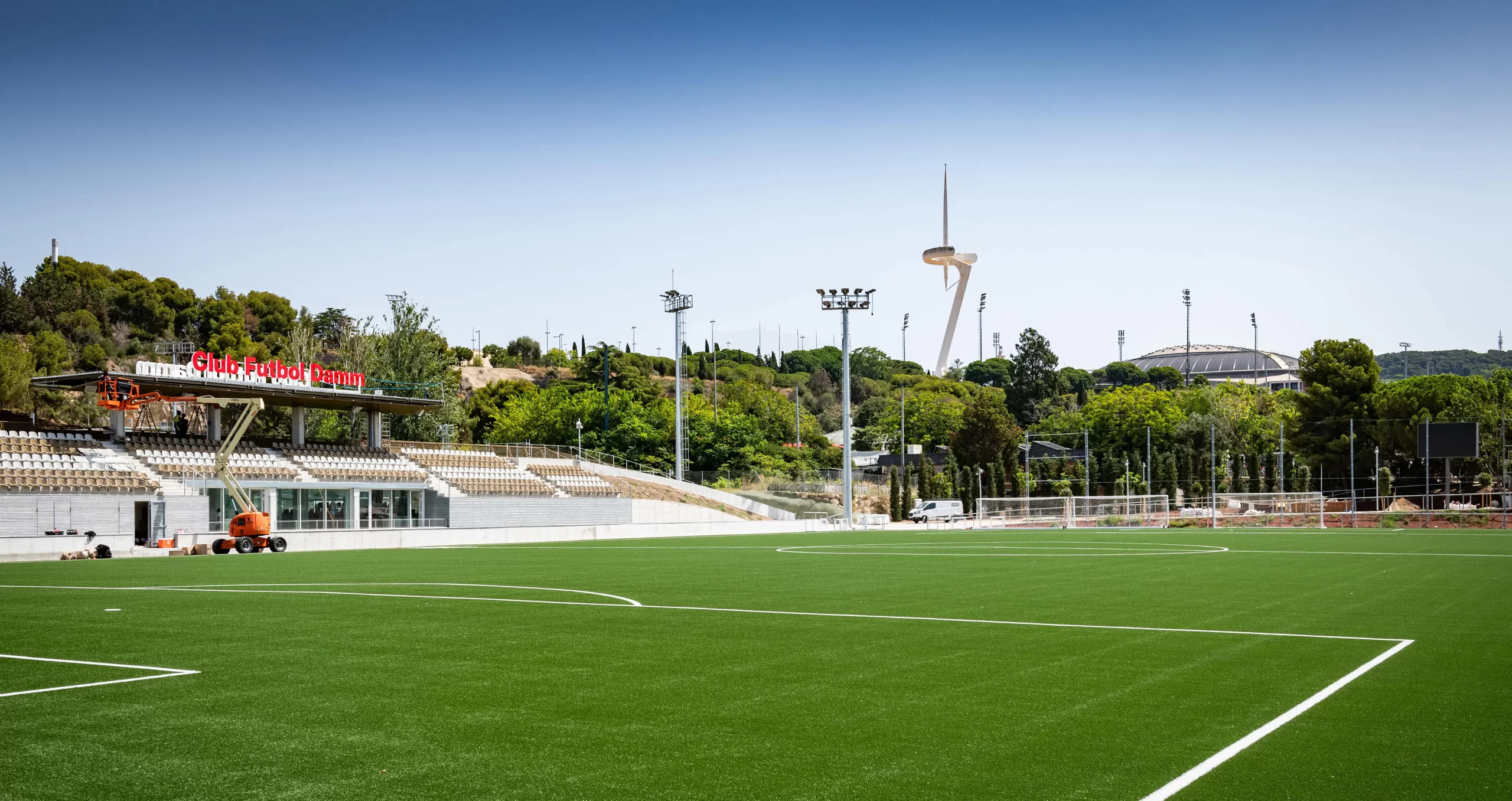
Ciutat Esportiva Damm is a project promoted by the Damm Foundation, built to coincide with the 70th anniversary of Club de Futbol Damm. Located on Montjuïc Hill in Barcelona, the complex includes renewed facilities with two new buildings hosting offices and sports-related uses, along with several football pitches.
The complex stands out for its climate-awareness, integrating into the Montjuïc landscape as a CO₂-emission-free and energy self-sufficient facility (Nearly Zero Energy Building, NZEB). It operates with photovoltaic energy and reuses 75% of rainwater to irrigate the pitches.
- Year: 2022-2024
- Duration (months): 20
- Location: Ferrocarrils Catalans 12, Barcelona
- Surface area (m2): 14.725
- Developer: Fundació Esportiva Damm
- Architecture: Max de Cusa
- Photography: argotphoto
- Video: Fundació Damm
Cardoner Instal·lacions
Fusteria del Cardoner
-
Athlete wellbeing
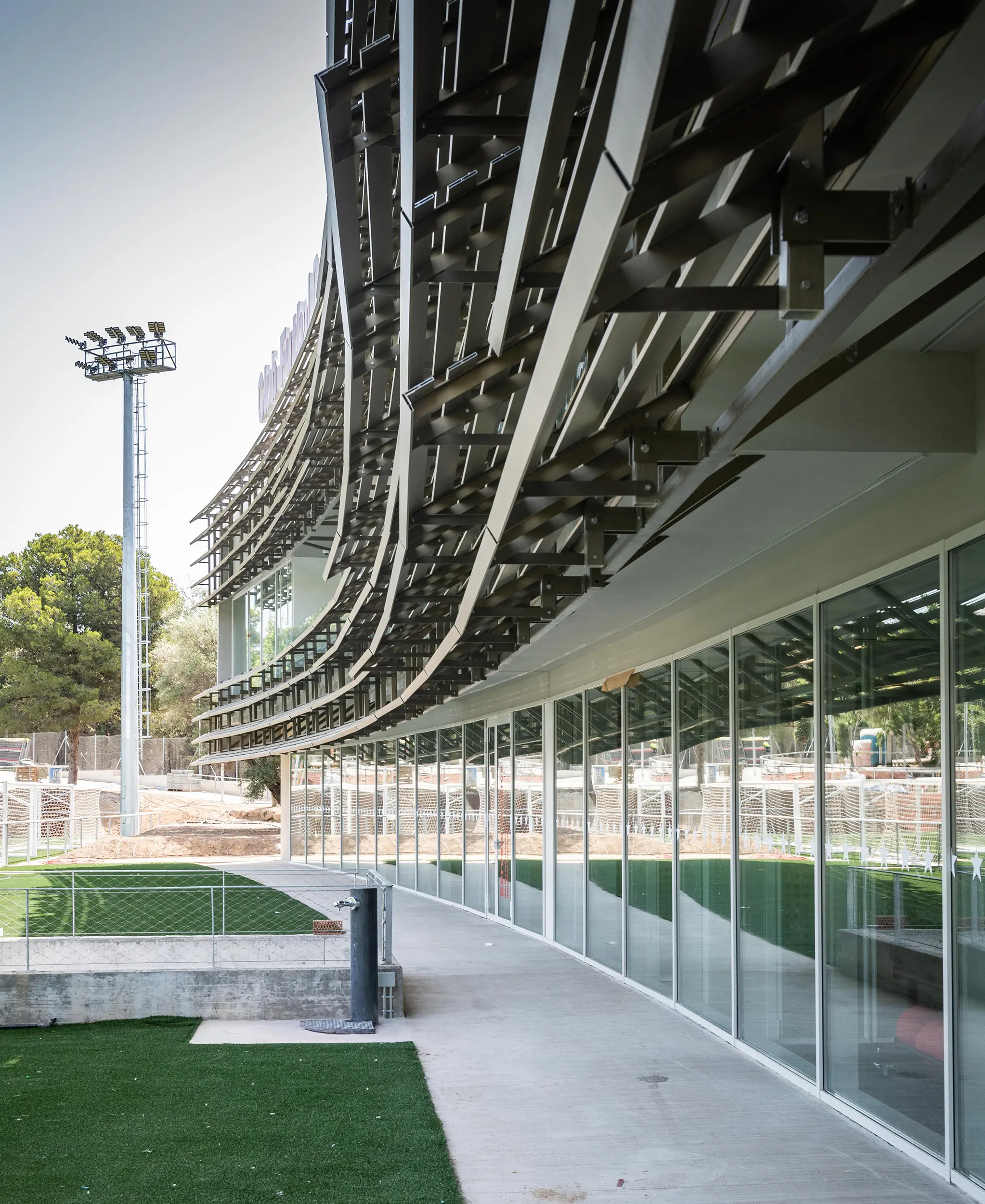
The buildings incorporate passive solutions such as cross ventilation, solar control and high thermal insulation, which reduce energy demand while providing a high level of comfort for users.
-
Construction innovation
The project stands out for its rigorous technical coordination. A lightweight metal primary structure was chosen, enabling a faster and more efficient execution, together with advanced technical systems for HVAC and electrical systems.
-
Building while the complex remained operational
Throughout the construction period, work was carried out ensuring safety and minimal disruption to sporting activities.
Sustainable, decarbonised facilities
- A rainwater collection system was installed, reusing over 75% of runoff for pitch irrigation, complemented by a greywater treatment plant for water from the locker room showers. Additionally, 280 m² of photovoltaic panels generate 50 kW of clean energy for self-consumption.
Improved ground conditions without environmental impact
- Before construction began, the soil’s mechanical properties were improved by slightly reducing the level and incorporating additives such as lime and cement, minimising earthworks and reducing the environmental impact from hauling excavated soil to landfills or from bringing in new soil.
Optimising team efficiency
- The project was divided into two areas: building and refurbishment, and site development and football pitches. The team included architects, structural and MEP engineers, and a construction team specialised in metal structures and finishes. Coordination between trades was key to adapting to an active environment with tight deadlines.