Sagrada Família
- New build
- Cultural and religious


The Expiatory Temple of the Sagrada Família is the most visited monument in Spain, an iconic building that, in the collective memory of Barcelona’s citizens, has always been under construction. Works began in 1882 and are now in their final phase. Constructora del Cardoner has been continuously involved since 2017, carrying out the simultaneous construction of several areas of the temple.
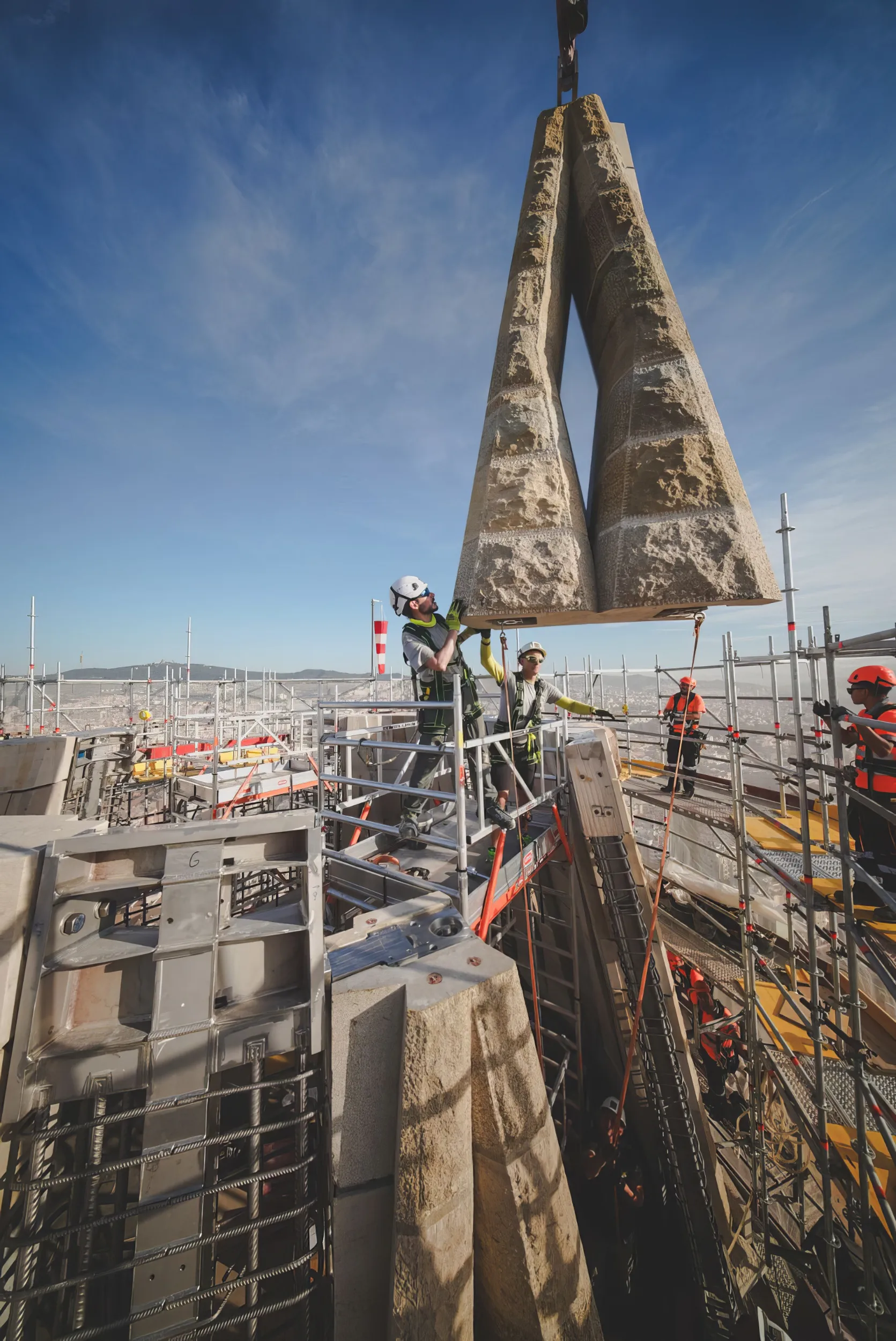
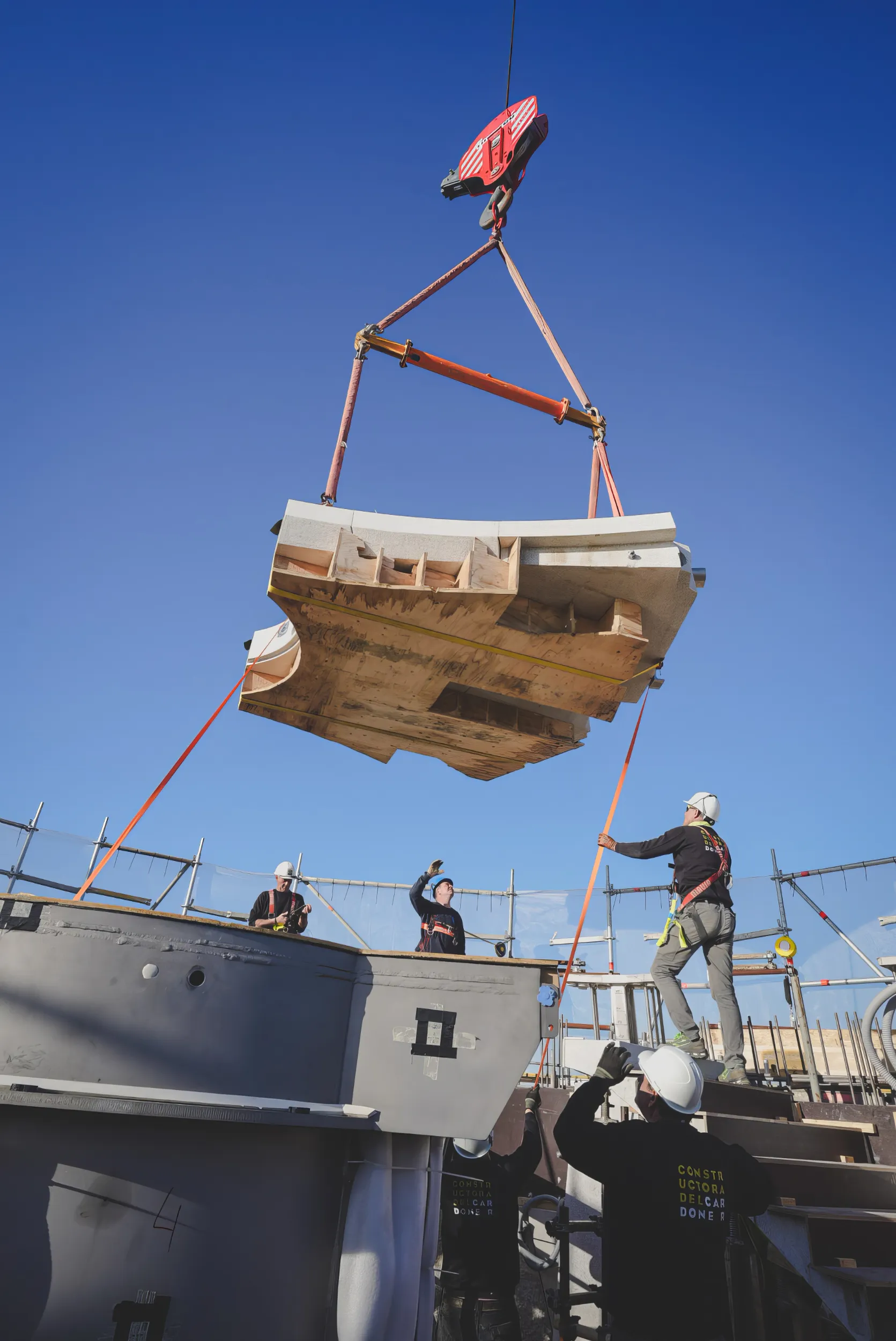
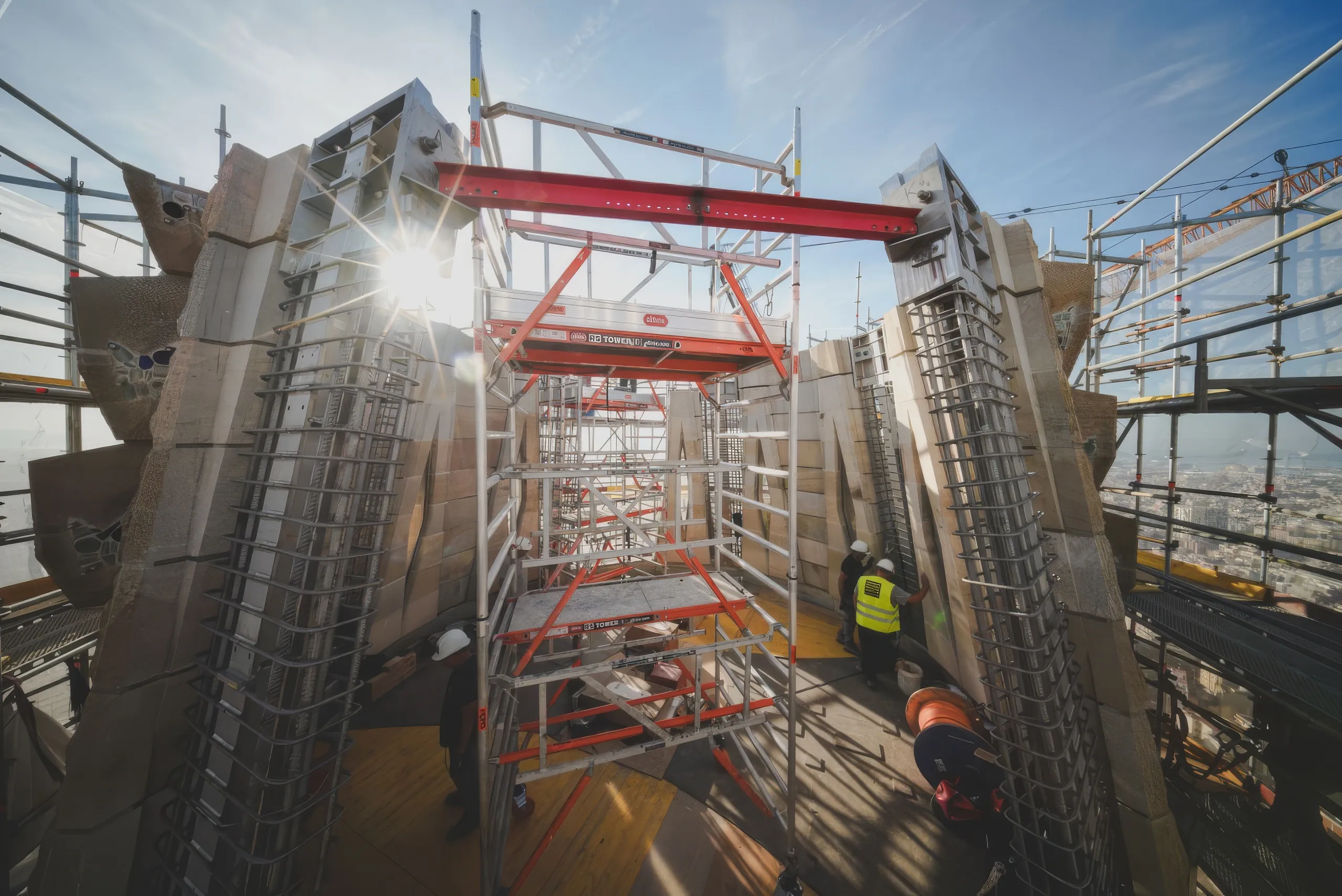
The works involve high-level operations carried out by a highly specialised team working on the temple’s towers, including the Tower of Jesus, one of the most significant milestones of the complex. Comprehensive logistics management includes the pre-assembly of structural and ornamental elements in the workshop prior to their final installation on site. The project has also involved restoration works on some of the oldest areas of the complex, such as the Mercè Cloister, which has been rehabilitated and structurally upgraded.
- Year: 2017-Actualitat
- Location: Mallorca 401, Barcelona
- Developer: Junta Constructora del Temple Expiatori de la Sagrada Família
- Architecture: Jordi Faulí i altres arquitectes especialitzats
- Photography: Junta Constructora del Temple Expiatori de la Sagrada Família
-
High-level works
Carried out by a highly qualified team in an environment with a high volume of visitors. The construction of the Tower of Jesus, using highly specialised assembly procedures and safety systems, represents one of the most significant milestones of the basilica complex and will culminate with the installation of a large cross at its summit.
-
Teamwork by 50 specialised professionals
The site team is made up of between 30 and 50 specialised professionals, distributed across different technical and trade disciplines and working under constant multidisciplinary coordination. Many of them have a long-standing involvement in the construction of the basilica, contributing extensive knowledge of the project and its unique construction processes.
-
Construction, restoration and rehabilitation
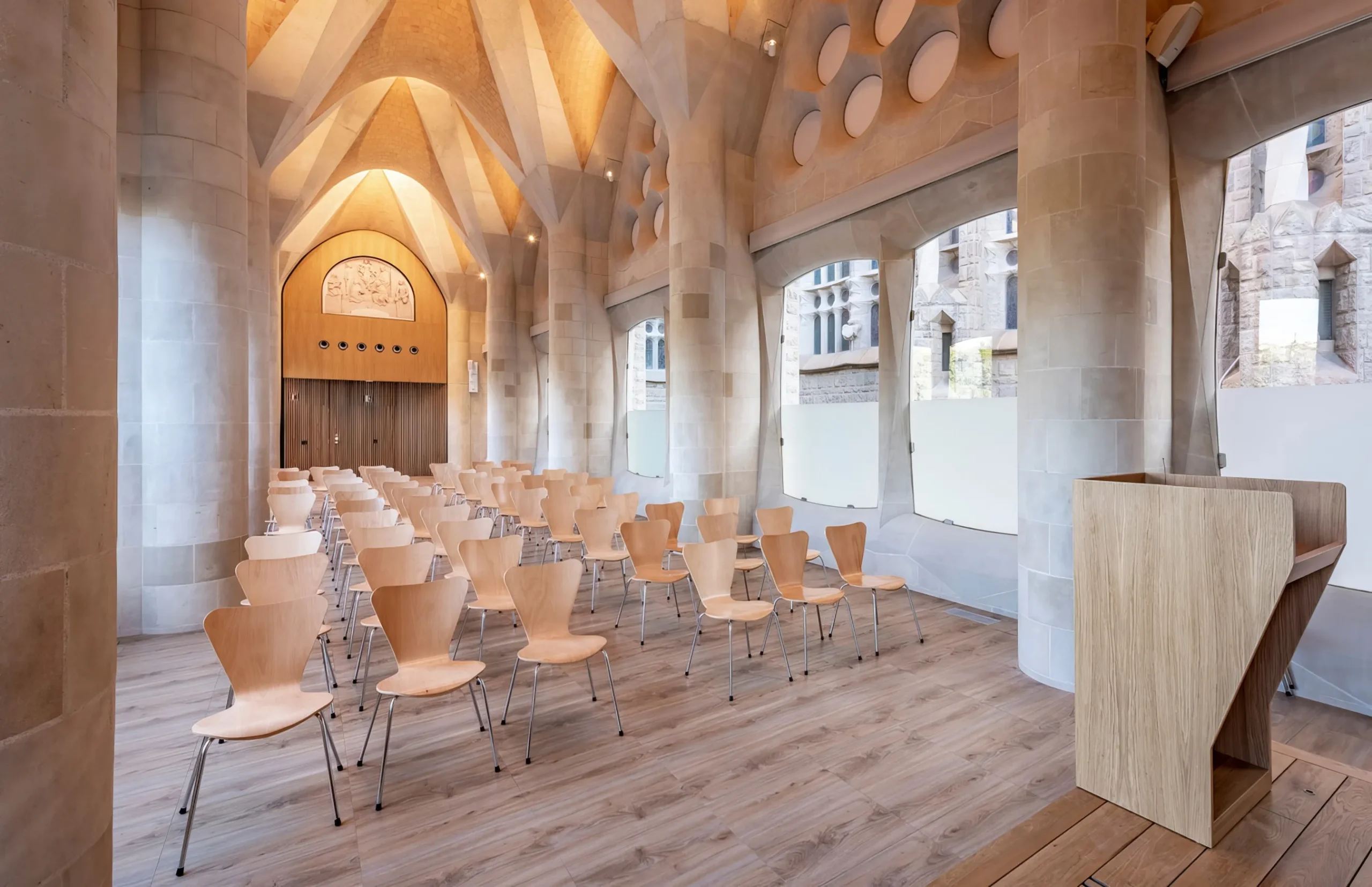
Given that construction began in 1882, restoration works have been required on elements belonging to already-built areas of the complex, notably the rehabilitation and structural improvement of the Mercè Cloister.
Sustainable construction
- Logistics and assembly optimisation, minimising internal transport and reducing waste generation to a minimum.
- Use of durable materials and long-life techniques designed to preserve the site’s heritage value and ensure longevity.
- Application of energy-efficiency and sustainability criteria in process design, contributing to a more environmentally responsible execution.
Construction-oriented technological solutions
- 3D scanning and modelling to adjust singular geometries and control the position of each element on site, using high-precision laser scanners and digital surveying systems.
- Specialised construction techniques, including structural injections, stone-to-metal tensioning and joining systems, ornamental works and millimetre-accurate placement of complex panels.
- Collaborative working system, with shared planning, safety and quality controls among all agents involved in the project.
Innovative and safe construction techniques
- Application of innovative structural techniques, such as stone-to-metal connections using structural resins, high-strength cement injections, and post-tensioned and tensioned bar systems.
- Piece-by-piece production and assembly of all temple elements, with maximum fidelity to the original designs and a high level of execution detail.
- Advanced safety systems, including prior testing of structural and ornamental elements.